
Wildlife in a world of waste
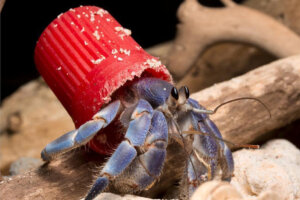
Plastic and other human-made materials have become so pervasive that wildlife is no longer simply exposed to our waste — animals are incorporating it into their lives. We investigate this emerging dimension of the Anthropocene, from urban birds weaving artificial materials into their nests to terrestrial hermit crabs adopting discarded objects as homes. In birds, detailed ground-collected data reveal how human-made materials become incorporated into the nest — an extended phenotype, where an animal’s behaviour and biology are expressed beyond the organism itself. But some questions demand a much broader lens. Moving from local field observations to the global scale, we use iEcology — harnessing images and other digital data available online to address ecological questions. This approach revealed that artificial shells are used by hermit crabs across tropical coastlines worldwide. Together, these complementary approaches open fascinating questions about behaviour, adaptation and the consequences of life in an increasingly human-modified world. We are now extending this research to explore the conservation challenges facing hermit crabs, connecting their ecology with the need to protect them in a rapidly changing world.
Selected publications on the topic:
2024
The plastic homes of hermit crabs in the Anthropocene Journal Article
In: Science of the Total Environment, vol. 913, pp. 168959, 2024.
2022
The extended avian urban phenotype: anthropogenic solid waste pollution, nest design, and fitness Journal Article
In: Science of the Total Environment, vol. 838, pp. 156034, 2022.